Categories
How to Blog

Tips to Have your Webpage in Tip Top Shape

Now that you have created your own website based off of the steps from last week’s blog, I’m sure you are asking “what is the next step?” Well since you have taken the measures to create a website, now the empty skeleton of your themed site sits awaiting your creative mind to take over. This part of the web design process can be really enjoyable if you let your creative juices flow! I am going to provide you all with the 5 most useful tips when designing your website so it fits the brand you want to portray to the public. 

The first thing your viewers see when they click on your website is your homepage. According to an instructional video on homepage design “the homepage is the window to your brand and to your content so it really needs to pop.” This video: https://youtu.be/t14MwuWH_ts speaks on the first tip we will discuss. 

Tip #1: There’s no place like “Homepage”

Growing up your parents always tell you that the most important thing is to make a good first impression when meeting someone, so why wouldn’t you want your website to make a first impression when meeting your viewers? The homepage might be the single most important part of your website, and if it is hard to navigate most people will simply give up. First and foremost, your homepage should be clear in what your website’s purpose is. The video in the link provided states how the main homepage shouldn’t be too flashy or over the top, it should have key points and an easy way to get to the other pages on your website. 

Tip #2: Extra! Extra! Read all “About Us” 

According to an article written by Jordan Dick on https://venturi-web-design.com/planning-a-website-organizing-your-content-a-short-guide-for-beginners/  the most viewed page other than your home page is the “About” page. This page is so important because viewers come here to learn more about the creator of the site… YOU! This is where you can get really personal with your viewers and tell them your background and why you decided to create the website. On this page you should put pictures of yourself, stories, and personalize it to your heart’s content! 

Tip #3: Call Me Maybe

Another vital page to include during your web design process is a contact page. This page should at least include an email address so your audience can get in touch with you. This is also where you can include links to your social media to build your brand further.

Here is an example of a good contact page: 
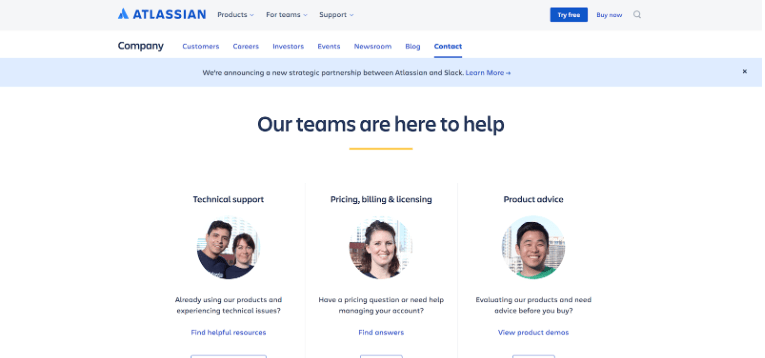
Contact page from Atlassian that provides contact information to different sections of the company such as: Technical support, Pricing, Billing, and Licensing, and Product Advice

Atlassian does a great job of presenting their contacts so that customers know exactly who they are getting in touch with. 

Tip #4: Land(ing) Ho! 

Now let’s talk about landing pages. Sometimes your audience will be directed to a certain page of your website based off of what they type into the search engine. For example if I type in “Womens Clothes Nordstrom” into Google I am immediately directed to this page:
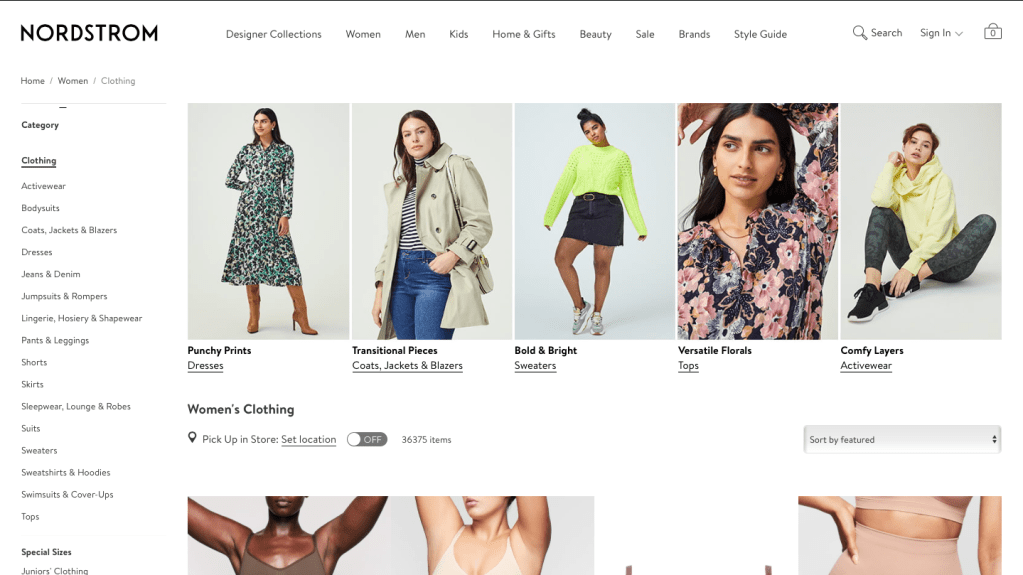
The Women’s Clothing landing page on Nordstrom’s website

Because Nordstroms has multiple landing pages based off of their merchandise that they are selling, it makes their website easier to navigate, and overall more efficient for the customer. This also increases your chances of your website being viewed because more landing pages translates into the more entry points you have to your website.

Tip #5: The Customer Knows Best

The last tip before designing your page, is to consider who you’re designing it for. The theme and feel of your website should be based on who is viewing it and using it on a daily basis. By taking into account who your audience is, you are able to better cater to their needs. Where you guide your viewers, and how you meet all of their needs is going to be the main reason your website is successful or unsuccessful. 

I hope these tips help and I cannot wait to see what you create. 

Happy designing!

Works cited:

Ling, Amy, et al. “Organizing Website Content – A Step By Step Guide For Beginners.” Venturi Web Design, venturi-web-design.com/planning-a-website-organizing-your-content-a-short-guide-for-beginners/.

Categories
How to Blog

Steps so Simple Even your Dog Could Blog

Have you ever thought about writing a blog whether it’s on a certain topic or just finding an outlet for your voice? When it comes to blogging and online posts there are certain tricks of the trade that will make your site more appealing to viewers. According to this article by Writers Digest, https://www.writersdigest.com/online-editor/the-12-dos-and-donts-of-writing-a-blog, there are Do’s and Don’ts to writing a blog.

First let’s tackle the Do’s…

  1. When starting a blog you should choose a focus topic to base the content of your posts off of. While this blog will primarily be on web design, many bloggers worldwide choose topics such as fashion, food, traveling, etc. The categories and creativity are endless! 
  2. The next step is to find your voice! Every blogger has their own individual personality and it is pertinent to the success of your blog that you let yours shine through! 
  3. Third, including links to other articles and blogs makes the experience better for your readers, increases how many clicks you get on your website, and lastly helps increase your exposure on the search engine page.
  4. Include images. Everyone likes to look at pictures. It is not only easier on the eyes than a large wall of text, but it entices readers and makes your page more aesthetically pleasing.
  5. Put yourself out there! Whether it’s responding and commenting on other blog posts or getting exposure on social media sites such as Twitter and Instagram, publicity is key when it comes to having a successful and well-known blog.

How to apply the Do’s 

If I were making a blog that coincides with my career path, I would most likely choose sports as my focus. Now that the first step is complete it is time to start writing. Finding your voice tends to become easier as you get more comfortable with the blogging process. It can be as simple as adding humor to your posts or giving your strong opinion on the subject of your blog. Next, including links is an easy way to provide your readers with even more information on the topic. So in the example of the sports blog, if I was writing a blog on a player being traded to another team, I might include a link to an ESPN article on that specific player’s stats or even a link to the biography of that player such as this one, https://www.espn.com/nba/player/_/id/6450/kawhi-leonard, so my readers can learn even more about him/her. Another good thing to do would be to add a picture of this player, so the reader knows what the person looks like and is, therefore, more knowledgeable. If this theoretical player being traded was say… Kawhi Leonard, I would insert a picture like this:

Picture of Kawhi Leonard while playing for the Los Angeles Clippers

 Visual aids are always helpful while constructing a blog. Lastly, in order to put myself out there, I would connect with other sport pages on either twitter, Instagram, Facebook, or any other social media platforms and ask them to give my blog a shout out so that I could get viewers from people that are interested enough to follow those sports pages in the first place. 

Now let’s talk about the Don’ts…

  1. Don’t set unrealistic goals or posting schedules that you can’t meet, and then leave your viewers waiting on new content…
  2. Don’t limit your word count. Take as many or as few words as you need in order to get your point across.The most important part is to get all the information in the post.
  3. Don’t make grammar mistakes. A few typos here and there is understandable as we are all human, but the more you can avoid mistakes the more credibility you have, and the more you are respected by the reader. 
  4. Try not to be negative. You are more likely to be well received by the reader if what you wrote is uplifting, positive, inspiring or funny.
  5. Don’t write long paragraphs. When readers open a tab and it is a giant wall of text and are more likely to click off and not read. Whereas readers prefer short paragraphs that are more enjoyable to read. 
  6. Avoid trying new things. It is best to stay in your category and not branch out too far. If your viewers are enjoying the content you’re producing then as my grandmother says “don’t fix it if it ain’t broke!”

How to avoid the Don’ts:

In our example of the sports blog, I would choose a posting schedule that is obtainable for me such as maybe 2 to 3 times a week. Another good thing to do is to set days of the week such as Tuesday, Thursday or Monday, Wednesday, Friday to post. Next, write until you are content with what you have produced. If you have images and your blog is formatted well people will read it even if it is long. This also has to do with the don’t of long paragraphs. Try to be as concise as possible with your words, but if it’s programmed well people will enjoy it more. The next don’t regarding grammar is pretty self-explanatory. A good way to ensure this doesn’t happen is to have a few people read it over and check it. Next, try to be as positive as possible, in the hypothetical player trade from earlier, in my blog I might focus on how this player’s abilities will be a good thing for the new team he is being traded to rather than how the old team is going to be awful after the player leaves. Lastly, since I chose the topic of sports, it is best to stick with it, because if I decide to do a blog on food one day and sports the next, my viewers will not only be confused, but I will most likely lose some of them too.

How I will implement these tips into my weekly blogs:

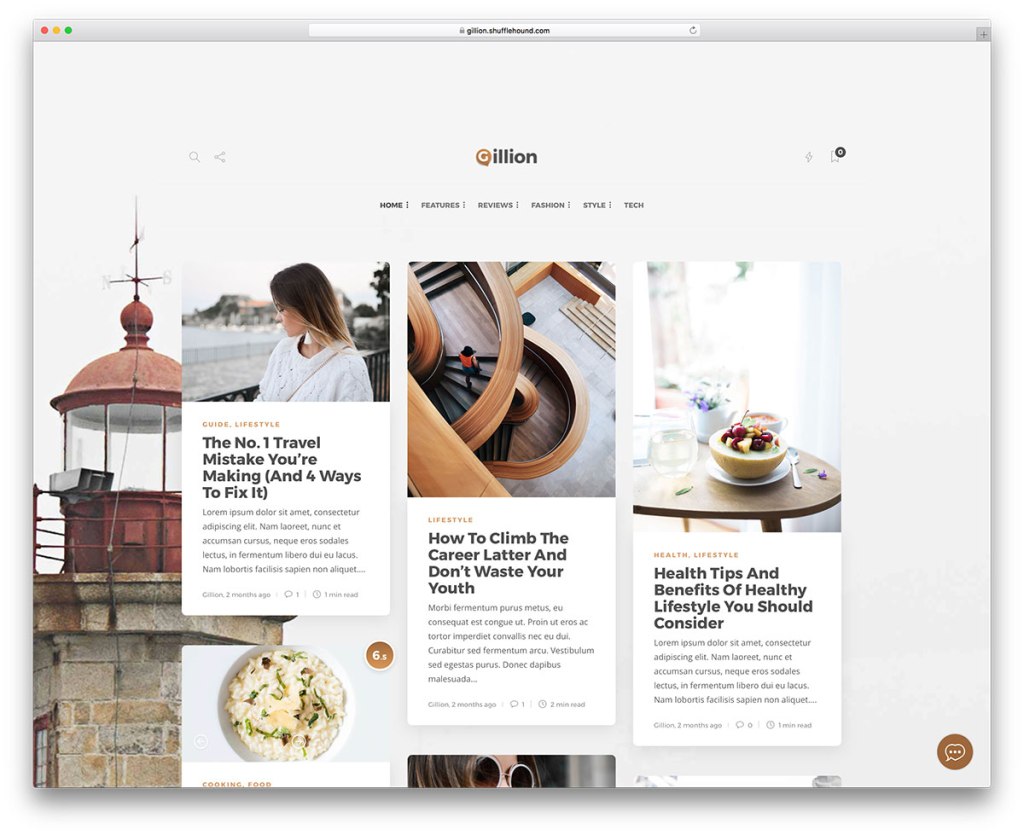
In order to make my blog the best it can be to keep my readers engaged, I will make sure my page is organized and easy to navigate. An example of a well developed, organized blog is pictured below. As you will notice, there are drop down tabs and other easy to use tools to navigate the website.

Blog example

If it takes more than two clicks to get information, many viewers lose interest and exit your website. Making your page more accessible to viewers makes it more desirable to those reading it. I will also keep my posts upbeat, informational and relevant to the interests of my viewers. 

Thank you for reading. Until next Friday! 🙂

Citations:

Klems, Brian A. “How to Write a Blog: The 12 Dos and Don’ts of Writing a Blog.” Writer’s Digest, 31 May 2018, http://www.writersdigest.com/online-editor/the-12-dos-and-donts-of-writing-a-blog.

Design a site like this with WordPress.com
Get started